
A swim ring designed for a person with a disability is commonly described as an adaptive Swimming Ring, supportive swim float, aquatic therapy float, or body-support flotation device.
There is no single design suitable for every disabled swimmer. A person with limited leg movement may need different support from someone with poor trunk control, reduced grip strength, muscle weakness, sensory sensitivity, or an uneven body position in water.
The product should therefore be selected around the individual user and the aquatic activity, not simply by age or body weight.
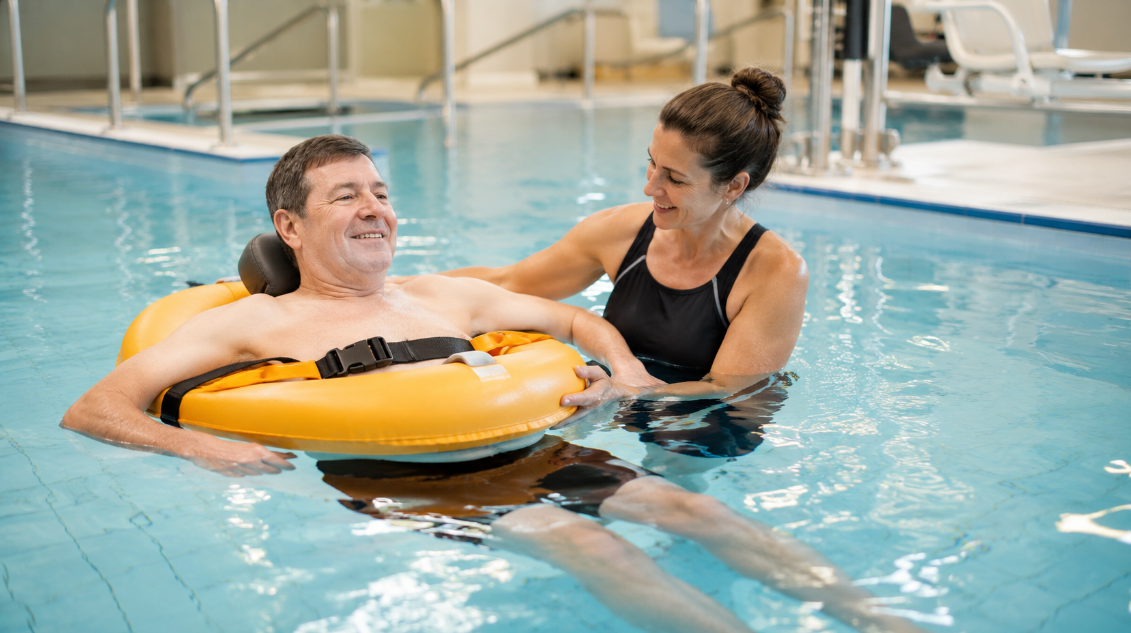
An adaptive ring or float provides buoyancy around part of the body.
Depending on its design, it may help the user:
Remain supported at the water surface
Maintain a more stable body position
Participate in supervised water activity
Practice movement with reduced load on the joints
Rest between swimming exercises
Feel more confident in the pool
Receive assistance from a caregiver or therapist
It should not be described as a cure or guaranteed rehabilitation product unless it has been developed, tested, and approved for that medical purpose.
A circular swimming ring is usually a recreational or supportive product.
It is not the same as an approved personal flotation device or rescue product. A ring can move, tip, deflate, or allow the user to slide through the center opening.
The user must remain under direct supervision by a capable adult, instructor, therapist, or trained caregiver.
Some disabled swimmers may be unable to call for help, recover from an overturned position, grip the ring, or keep their airway clear.
Supervision should therefore be close enough for immediate physical assistance.
A float should never be used to leave a person unattended in a pool.
A user with reduced leg movement may need a ring that supports the torso without restricting the arms.
Handles can help the swimmer or caregiver control position.
A basic open ring may not provide enough stability for someone who cannot maintain an upright body position.
Additional body support may be required, selected with professional input.
Large soft handles can be easier to hold than narrow straps.
The handle position should also allow a caregiver to guide the float without pulling the user into an uncomfortable posture.
Some users may be sensitive to texture, pressure, bright patterns, noise from valves, or unexpected movement.
A smooth surface, simple shape, controlled color palette, and gradual introduction to the water may improve comfort.
| Design | Possible Application | Important Limitation |
|---|---|---|
| Large open swim ring | General supervised buoyancy | User may slip through the center |
| Ring with handles | Added grip and caregiver control | Handles do not prevent overturning |
| Seat-style float | Supports a seated position | Must fit the body correctly |
| Body-support tube | Supports the torso horizontally | Requires close positioning assistance |
| Multi-chamber float | Retains partial inflation after one chamber fails | Still requires immediate supervision |
| Therapy float system | Used in structured aquatic sessions | Should be selected by trained personnel |
The product name alone does not indicate whether it suits a particular person.
A ring that is too large may allow the user to slide downward. A ring that is too small may place pressure on the chest, abdomen, arms, or neck.
Important measurements can include:
Body weight
Chest or waist circumference
Shoulder width
Center-opening size
Arm movement
Sitting balance
Preferred body position
Caregiver access
The fit should be assessed in a controlled pool environment before regular use.
A neck ring suspends the body below the water while supporting the head around the neck.
This is different from a torso or body-support swimming ring. Neck-support floats have attracted safety warnings, particularly for babies and users with developmental or special needs.
An adaptive swimming product should not place uncontrolled pressure around the neck or depend on the neck opening to keep the airway above water.
Bright, contrasting colors can help caregivers and pool staff locate the user and float quickly.
Independent chambers can reduce the chance of the complete product losing all buoyancy after one puncture.
This is a supplementary design feature, not a replacement for supervision.
Rounded seams and smooth welded edges reduce friction against the skin.
The product should be checked for rough welds, damaged material, and exposed components before every use.
Handles can help with positioning and transfers in the water.
They should be firmly attached and placed where they do not trap the user’s arms or clothing.
Valves should be easy to close securely but difficult to open accidentally.
Inspect inflation before every session and stop using a float that gradually loses pressure.
A float used during aquatic therapy may be part of a structured program supervised by a therapist.
The professional may use buoyancy to support balance, movement, relaxation, or motor-control exercises.
Recreational pool use has a different objective and may not provide the same controlled environment.
A manufacturer should avoid making medical claims for a recreational swimming ring unless the product has the required evidence, testing, and regulatory status.
The ring does not solve every accessibility issue.
The swimming location may also need:
Pool lift
Sloped entry
Transfer platform
Stable handrails
Non-slip deck
Accessible changing space
Trained assistance
Clear emergency procedures
Safe entry and exit can be as important as support while the user is in the water.
For schools, rehabilitation suppliers, aquatic programs, distributors, and care facilities, a clear product brief should include:
Intended user group
Supported body position
User measurements
Required buoyancy
Center-opening size
Handle number and position
Air-chamber structure
Surface material
Color visibility
Warning labels and packaging
A sample should be evaluated by relevant professionals and users before a production order is approved.
We manufacture swimming rings, Pool Floats, Inflatable Pools, Ice Bath Tubs, inflatable furniture, toys, and other vinyl inflatables.
Our design and engineering teams can review customized dimensions, shapes, air chambers, handles, colors, printing, valves, and packaging.
For a Custom Adaptive Swimming Ring, we can manufacture according to a buyer’s approved design and specification. Medical, rescue, therapeutic, or life-saving claims should only be used when the finished product has completed the relevant testing and compliance process.
Send us the intended use, user measurements, product drawing, chamber design, handles, material, visibility colors, valve, warning information, packaging, and order quantity.
We will review the design for manufacturability and prepare a Custom Adaptive Swimming Ring sample plan.
 Mobile Phone:
 Phone:
 Contact Now
 Youtube