
A bathtub faucet may continue dripping after the handle is closed, leak around the control, or allow water to appear behind the trim plate. The repair method depends on the location of the leak and the type of valve installed inside the wall.
Many visible drips are caused by worn cartridges, washers, O-rings, seals, or valve seats. A leak behind the wall may involve a loose connection, cracked valve body, or damaged pipe and should be handled more carefully.
Before removing any faucet component, shut off the water supply and confirm that no water continues flowing through the valve.
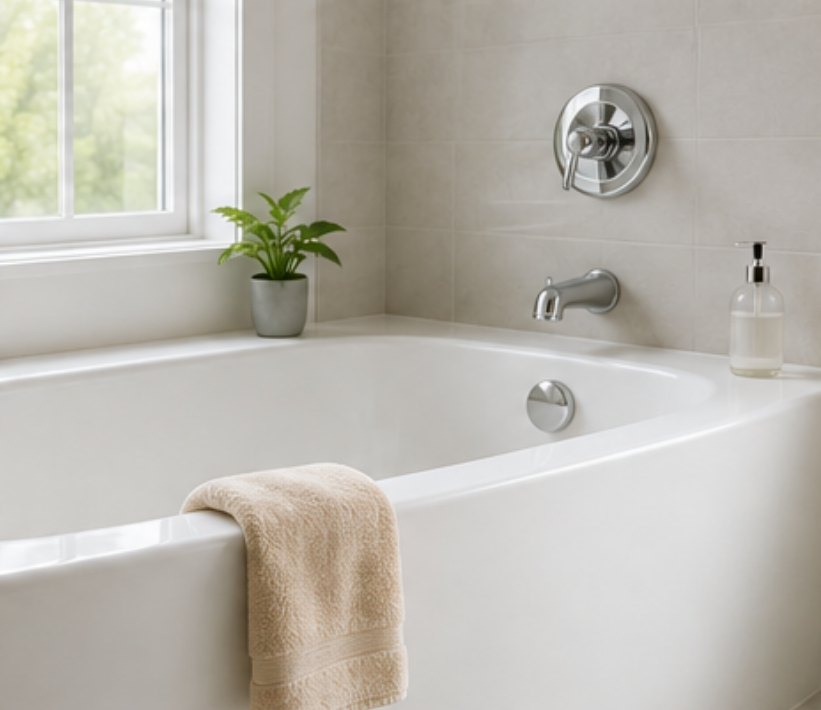
Do not begin by replacing random components. First determine where the water is escaping.
A spout that drips while the faucet is turned off usually indicates that an internal valve is no longer sealing completely.
Possible causes include:
A worn cartridge
A damaged rubber washer
A cracked O-ring
Mineral deposits inside the valve
A worn valve seat
Incorrectly installed replacement parts
A small drip may gradually become more frequent as the sealing surface continues to wear.
Water appearing around the handle or control plate may come from a damaged cartridge seal, stem packing, or internal O-ring.
This leak is often easier to notice while the faucet is running because water pressure increases around the affected part.
Water stains, loose tiles, damp drywall, or moisture below the bathtub can indicate a concealed leak.
Stop using the faucet when water may be entering the wall cavity. Concealed plumbing damage can affect the wall, floor, insulation, and surrounding structure.
Bathtub faucets use different internal control systems. Identifying the correct type helps prevent ordering the wrong replacement part.
A compression faucet uses a threaded stem and rubber washer that presses against a valve seat.
A worn washer or damaged seat can prevent the faucet from closing completely.
A cartridge faucet uses a removable internal unit to control water flow and temperature.
Single-handle and double-handle designs may use different cartridges. Even visually similar cartridges can have different lengths, port positions, and connection structures.
A ceramic disc valve uses two hard ceramic surfaces to regulate water.
The complete cartridge is commonly replaced when the internal sealing surfaces become damaged or contaminated.
Cover the bathtub drain before removing screws or clips. Small components can easily fall into the waste pipe.
Common tools may include:
Flat and Phillips screwdrivers
Hex keys
Adjustable wrench
Cartridge puller
Needle-nose pliers
Soft cloth
Replacement cartridge or washer
Plumbing-approved lubricant
Manufacturer instructions
Protect the faucet finish with a cloth before using a wrench. Metal tools can scratch chrome, brushed, matte, or decorative surfaces.
Use the local bathroom shutoff valves when available. Otherwise, close the main water supply serving the property.
Open the bathtub faucet briefly to release pressure and drain the remaining water from the line.
Do not rely only on closing the faucet handle. Water must be isolated before the valve is disassembled.
Locate the handle screw. It may be visible, positioned beneath the handle, or hidden behind a decorative cap.
Remove the handle carefully and place the parts in the order they were taken off.
Take a photograph before removing clips, sleeves, retaining nuts, or temperature-limit components.
This makes it easier to reinstall the parts in the correct direction.
Look for mineral deposits, corrosion, damaged seals, and signs of moisture behind the trim plate.
A dry valve body with a dripping spout usually points to an internal sealing problem. Moisture around pipe joints may require professional plumbing repair.
Release the retaining clip or nut according to the valve design.
Pull the cartridge straight outward. Use the correct cartridge tool when mineral buildup makes removal difficult.
Excessive force can move or damage pipes concealed inside the wall.
Stop when the valve body shifts, the cartridge breaks, or the retaining part cannot be removed safely.
Inspect the cartridge, washers, O-rings, and valve seat for:
Cracks
Flattened rubber
Hardened seals
Scratches
Mineral buildup
Broken plastic
Uneven wear
Replace damaged parts with components made for the exact faucet model.
Clean loose mineral residue from the valve chamber with a soft cloth.
Do not use a screwdriver, knife, or abrasive tool inside the sealing area. Scratching the valve body may prevent the new cartridge from sealing correctly.
Apply a small amount of plumbing lubricant when recommended.
Do not use cooking oil, automotive grease, or an unsuitable petroleum-based lubricant, as these products may damage rubber or plastic components.
Insert the replacement cartridge in the specified direction.
Incorrect orientation may reverse hot and cold operation, restrict water flow, or prevent the retaining clip from fitting properly.
Reinstall the retaining component, trim plate, handle, and decorative cover.
Turn the water supply on slowly. Test the hot and cold settings, then close the faucet and watch the spout.
Check around the handle, trim plate, wall opening, and bathtub area for moisture.
Repair may not be practical when:
The valve body is cracked
Replacement cartridges are unavailable
The finish is heavily corroded
Internal threads are damaged
The faucet has repeated leaks
Pipe connections are loose behind the wall
Several components have reached the end of their service life
A complete replacement may provide more reliable performance than repeatedly repairing an obsolete valve.
A Portable Bathtub With Drain normally does not use a concealed wall-mounted bathtub faucet.
Water may be added with a hose or nearby fixture, while an integrated valve or drainage hose is used to empty the tub after use.
Inspect:
The drain cap
Rubber gasket
Outlet valve
Hose connection
PVC seams
Support structure
Tub base
Testing the tub with a small amount of water is safer than discovering a loose drain fitting after it has been completely filled.
Drain the water fully, rinse the tub with clean water, and wipe the outlet area with a soft cloth.
The drain should be dry before the portable tub is folded or stored. Trapped moisture can contribute to odor and residue around the valve.
Our factory manufactures Ice Bath Tubs, portable Cold Plunge Tubs, Inflatable Pools, inflatable beds, sofas, floats, toys, and other PVC inflatable products.
We have design, engineering, quality-control, business, and production teams supporting OEM and ODM projects.
For portable bathtub orders, buyers can discuss:
Tub dimensions and capacity
PVC and fabric structure
Insulating layers
Drain position
Valve and hose design
Support frame
Detachable cover
Product color
Customized logo
Retail or transport packaging
Developing portable tubs for home bathing, sports recovery, outdoor use, wellness retail, or private-label distribution?
Send us your required dimensions, water capacity, material structure, insulation, drain valve, hose length, frame design, color, logo, packaging, and order quantity. We will prepare a Portable Bathtub With Drain proposal for sample evaluation.
Previous: Is An Inflatable Pool Worth It?
 Mobile Phone:
 Phone:
 Contact Now
 Youtube