
Setting up an inflatable swimming pool is one of the simplest ways to create a refreshing outdoor space for families, children, or backyard leisure. Although installation is straightforward, the setup process still requires attention to ground conditions, air pressure, water filling sequence, and long-term stability. A well-prepared foundation ensures the pool maintains its shape and prevents unnecessary wear. NEW designs its inflatable swimming pools with reinforced seams and durable materials, allowing users to enjoy a more reliable structure during seasonal use. Understanding each setup stage will help maximize the pool’s lifespan and ensure safe operation.
Ground preparation is one of the most important steps. A smooth, level area prevents the pool from leaning, shifting, or developing pressure points. Start by clearing small stones, twigs, and sharp debris. Even though NEW’s Inflatable Pools use thickened materials and upgraded seam technology, placing the pool on uneven or abrasive surfaces can still cause gradual stress on the bottom layer.
Many users prefer placing a protective ground cloth beneath the pool. This adds insulation and creates an additional protective barrier between the inflatable surface and the ground. Ensuring the ground is level is equally essential. Water naturally distributes weight, so any slope causes uneven pressure, making the pool walls lean outward. This can reduce available space inside the pool and may lead to unnecessary water overflow when children enter. Taking a few minutes to prepare the surface can prolong the pool’s condition throughout the season.
Inflatable swimming pools arrive folded for compact storage. When unpacking the pool, gently unfold it over the prepared ground. Avoid dragging or pulling the material across rough surfaces, as friction may weaken the protective coating. Once unfolded, spread the pool evenly, smoothing out creases to help the structure inflate symmetrically.
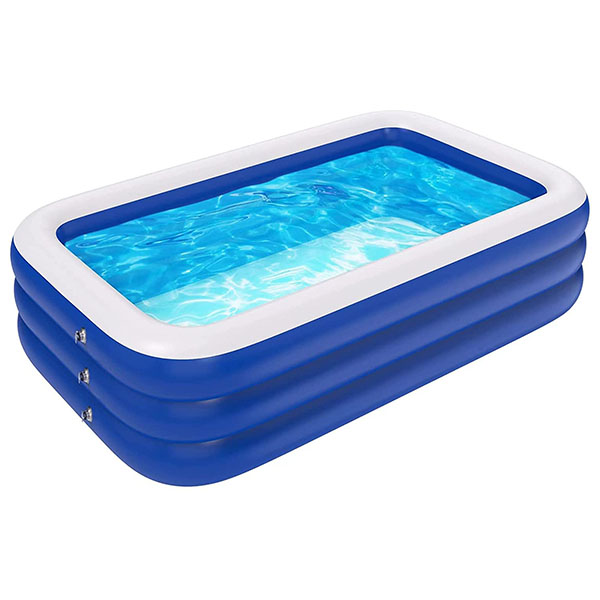
NEW’s inflatable swimming pools feature reinforced structure design, making them easier to position, as the walls naturally lift into shape once air begins to fill them. Before inflating, ensure the air valves are visible and unobstructed. This helps avoid twisting or bunching that may interfere with even inflation. Positioning the pool correctly at this stage ensures it retains its circular or rectangular form as intended.
Inflating an inflatable swimming pool involves filling the air chambers in the correct order and ensuring the right amount of air pressure. Many models include multiple air rings, and each one needs uniform inflation. Overinflation can strain seams, while underinflation causes the pool walls to sag.
| Step | Action | Notes |
|---|---|---|
| 1 | Begin inflating the bottom ring | Establishes stable base |
| 2 | Inflate middle rings (if applicable) | Ensures walls rise evenly |
| 3 | Finish with the top ring | Controls final height |
| 4 | Check firmness | Should feel stable but not rigid |
NEW recommends using an electric air pump for efficiency. The material of the NEW Inflatable Pool responds well to controlled airflow, reducing the risk of uneven inflation. After each ring reaches the desired firmness, close the valve tightly to prevent air leakage.
Once the structure is stable, begin filling the pool with water gradually. Starting with a slow, controlled flow allows the bottom layer to settle into place. While the pool fills, monitor the walls for any folding or uneven bulging. Water pressure automatically shapes the pool, but adjustments may still be necessary.
When the pool reaches one-third of its height, pause the water flow and examine alignment again. This mid-stage adjustment ensures the structure does not tilt. For deeper pools, maintaining symmetry is essential because water exerts significant force on the ring sections. NEW’s inflatable pools are engineered to handle high internal pressure, but proper filling prevents uneven stress that may affect durability over repeated use.
After filling the pool closer to its recommended water height, check that the surrounding area is stable and unobstructed. Heavy water weight means the pool should not be moved after filling. Ensuring proper placement beforehand avoids this issue. When fully filled, examine all air valves to confirm none are leaking.
A properly inflated pool should show no excessive bending, dips, or waves along the upper ring. NEW’s material selection offers good vertical support, helping the structure maintain its shape throughout usage. If minor adjustments are needed, slightly release or add air to specific chambers. Subtle air balance can significantly improve wall uniformity.
Water maintenance is critical for long-term use. Although inflatable swimming pools are temporary structures, the water inside can still develop bacteria, debris, and discoloration if left unmanaged. Depending on pool size, users may apply chlorine alternatives, filtration pumps, or manual scooping tools to keep the water clear.
NEW’s inflatable pools are compatible with small external filtration systems often used in backyard settings. Maintaining clean water extends both user comfort and the structural integrity of the pool. Dirty or chemically unbalanced water can weaken material coatings over extended periods. Routine cleaning also prevents slippery surfaces and allows the pool to remain an enjoyable outdoor feature for longer.
Some users enhance their pool setup with accessories such as soft floor mats, sunshades, cup holders, or seating pads. These accessories should be placed around or near the pool but not directly under high-pressure areas. For families, anti-slip mats and safety markers help guide children entering and exiting the pool.
The NEW Inflatable Pool integrates well with most backyard accessories due to its stable wall structure. Users can create a relaxing water environment with minimal extra components, as the pool’s reinforced rings already provide steady upper support for safe leaning or mild movement inside.
When the season ends or the pool needs cleaning, draining the water completely is necessary. Most inflatable pools include a drainage valve at the bottom, allowing controlled water release. Direct the water flow toward an appropriate drainage area to prevent flooding nearby soil.
Once empty, rinse the pool to remove sediment and allow it to dry fully before folding. Moisture trapped during storage can lead to mold or odor. After drying, apply a gentle fold pattern without sharp creases, which helps maintain material elasticity. NEW designs its inflatable pool materials to withstand repeated folding, making off-season storage simple and compact.
NEW’s inflatable pool features thicker sidewalls, high-strength air chambers, and improved seam reinforcements. These characteristics ensure that setup remains simple for users of all experience levels. The pool lifts into shape quickly during inflation and stays stable throughout water filling. Its durable PVC-based structure resists UV exposure during summer months, and the smooth internal surface increases user comfort.
Choosing a dedicated product such as the NEW Inflatable Pool provides advantages in convenience, safety, and longevity. Its well-balanced design supports secure installation in a variety of backyard environments and reduces common issues such as sagging or warped edges.
Setting up an inflatable swimming pool becomes much easier when each step is carried out with careful preparation and attention to detail. From leveling the ground to inflating each air chamber properly, every stage contributes to the stability and durability of the pool. Consistent water maintenance and correct storage procedures further extend its usable lifespan, allowing families to enjoy seasonal outdoor relaxation without complications. Choosing a well-designed structure also plays an important role, as a stable and reinforced product ensures safe, comfortable use throughout the summer months. With thoughtful setup and routine care, an inflatable swimming pool becomes a reliable and enjoyable part of any backyard environment.
 Mobile Phone:
 Phone:
 Contact Now
 Youtube