
When buyers search how much is an inground swimming pool, they are usually trying to understand more than a construction budget. They want to know what families are willing to spend, what type of pool products fit different markets, and where the real sales opportunity is. In many cases, the answer leads to a second question: if a permanent pool is too expensive, too time-consuming, or too difficult for the average household, what is the practical alternative?
That is where Inflatable Pools become highly relevant. For many distributors, retailers, and seasonal product importers, a family inflatable pool is not just a low-cost substitute. It is a faster-moving product category with broader consumer access, easier storage, lower installation barriers, and much lower purchase risk. For buyers looking at product lines with strong summer demand, this creates a more realistic business opportunity than competing in the permanent pool market.
An inground swimming pool often involves excavation, structural work, plumbing, filtration, permits, long installation cycles, and ongoing maintenance. That makes it a high-budget purchase for the end user. From a B-end point of view, this matters because expensive permanent pools naturally reduce the size of the target audience.
This is exactly why many importers and wholesale buyers shift attention toward above-ground and inflatable pool categories. A family that cannot justify the cost, time, or commitment of an inground pool may still be very willing to buy a large inflatable pool for seasonal use. That demand is not based only on price. It is also based on convenience, portability, and quick setup.
For a supplier, this creates a clear market logic. The higher the barrier to permanent pool ownership, the more attractive affordable and flexible alternatives become. That is why inflatable pools continue to hold strong value in summer retail programs, family recreation lines, promotional sales, and OEM seasonal collections.
The question how much is an inground swimming pool sounds consumer-focused, but it also has sourcing value. It helps buyers understand the gap between permanent pool ownership and portable pool demand. An inground pool is a long-term construction decision. A family inflatable pool is a product decision. One requires labor teams, site preparation, and continuous maintenance planning. The other can be packed, shipped, displayed, sold, and used with far less friction.
For distributors, this difference affects turnover speed. For brand owners, it affects product positioning. For project buyers handling temporary outdoor activity setups, it affects cost control and flexibility. Inflatables are easier to move, easier to store after the season, and easier to market to a broad audience that wants water play without construction work.
That is why product selection should not only follow the literal meaning of the search term. A smart supplier understands the intent behind that search. The buyer is asking about cost, but what they often need is a pool solution that fits budget-conscious consumers and delivers stable wholesale potential.
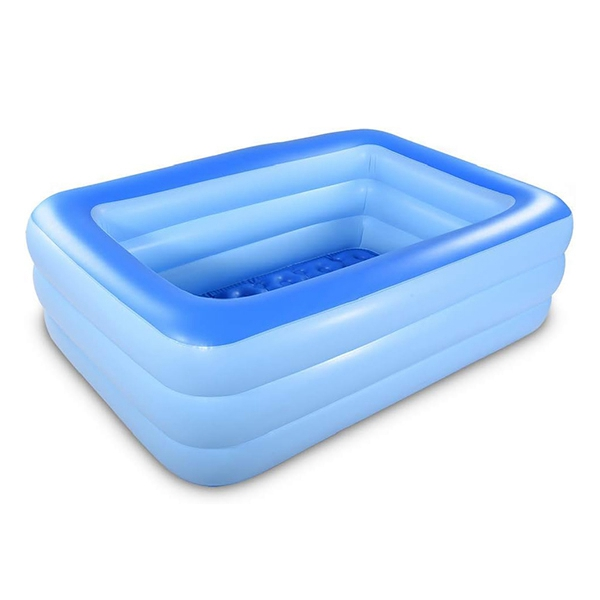
Our product fits this discussion because it answers the same need from a much more practical angle. Instead of a fixed pool that demands permanent installation, our family inflatable swimming pool gives buyers a portable product that is easier to ship, easier to sell, and easier for families to use in backyards and temporary outdoor settings.
The rectangular structure gives more usable space than many compact round options, which is important for family play and group use. The eco-friendly PVC material supports durability for regular seasonal use, while custom size, custom logo, and custom color options make the product more suitable for importers developing their own market identity. This matters for private label programs, promotional retail packs, and OEM product ranges where differentiation is important.
For buyers comparing categories, this is the commercial bridge between the headline and the product. Consumers may begin by searching the price of an inground pool, but many of them eventually choose a simpler and more affordable option. That shift in demand is exactly where inflatable pool suppliers can create value.
For B-end buyers, the biggest concern is rarely the product alone. It is whether the product can move well in the market and whether supply will stay stable during the peak season. In inflatable pool sourcing, common pain points often include material inconsistency, air leakage, poor packaging, unclear positioning, and weak factory communication during custom projects.
That is why choosing the right inflatable swimming pool supplier is more important than comparing prices line by line. If the supplier cannot support customization, maintain quality consistency, and communicate clearly about packaging and logistics, the buyer carries the risk. This becomes even more serious during summer sales windows, when delayed shipments or unstable quality can directly affect seasonal revenue.
An experienced inflatable swimming pool supplier should be able to support more than product supply. Buyers often need OEM branding, logo printing, packaging options, and size planning that matches their channel. Some need retail-ready packing. Some need bulk order efficiency for promotions or chain distribution. Some need customized specifications to avoid selling identical products already common in the market.
In pool products, OEM and ODM are not only about branding. They are also about market fit. One buyer may need a stronger family-focused design with colorful packaging for retail stores. Another may want a cleaner look for online sales. A third may be supplying seasonal recreation products under a house brand and need packaging that works for container loading and shelf presentation.
Our product supports this kind of commercial flexibility. The ability to customize size, color, logo, and packaging gives buyers more control over positioning. That is especially important when competing in crowded summer categories. If every inflatable pool looks the same, buyers are forced to compete on price alone. But with practical customization support, they can build stronger product identity and protect margin.
For importers and distributors, this is one of the clearest advantages of working directly with a supplier rather than simply trading standard stock items. A supplier relationship makes it easier to develop repeat orders, adjust product details, and plan the next season with more confidence.
Not every market can support high-value permanent pool demand, but many markets can support accessible family recreation products. This is where inflatable pools have broader commercial potential. They do not require construction teams or heavy after-sales service. They are easier for end users to understand, easier to transport, and easier to promote around family fun, backyard activity, children’s play, and summer gatherings.
This broad use case makes the category attractive for wholesalers and retailers. Our product is suitable not only for backyard family fun, but also for children’s playtime, small gatherings, and even selected commercial activity scenarios. That wider application range helps buyers sell into multiple channels instead of depending on only one customer type.
For many buyers, that flexibility matters more than chasing a premium niche. A product that fits supermarket promotions, online summer campaigns, toy lines, and family outdoor selections has stronger volume potential than a highly specialized category with limited turnover.
When choosing a supplier in this category, buyers should look beyond catalog images. Material quality is essential, but it is only one part of the decision. They should also look at how clearly the supplier handles customization, whether packaging options are practical, whether communication is smooth, and whether the supplier understands how the product will be sold.
This is especially important for first-time buyers entering the pool category. Many assume inflatable pools are simple products with simple sourcing logic. In reality, details like seam strength, inflation stability, size accuracy, packaging durability, and logo execution can all influence sell-through and return rates.
Working with a supplier who understands these details reduces uncertainty. It also helps buyers create a more complete sourcing plan instead of making decisions based only on the lowest quotation.
So, how much is an inground swimming pool? For many households, the real answer is that it costs more time, money, and commitment than they want to take on. That is exactly why family inflatable pools continue to attract strong demand in seasonal markets.
For distributors, importers, and private label buyers, this demand creates a clear opportunity. A well-positioned inflatable pool can answer the same leisure need with lower cost, faster turnover, and broader market access. Our family inflatable swimming pool is designed for that practical demand, with customizable options that support OEM and ODM programs as well as wholesale and retail supply.
If you are planning a summer product line, comparing suppliers, or preparing a bulk order, feel free to contact us with your market needs. We can help you review suitable specifications, customization options, and packaging solutions so you can move forward with a product plan that fits your channel more efficiently.
Previous: Can Hot Tubs Have Cold Water?
Next: How To Clean A Bath Tub?
 Mobile Phone:
 Phone:
 Contact Now
 Youtube