
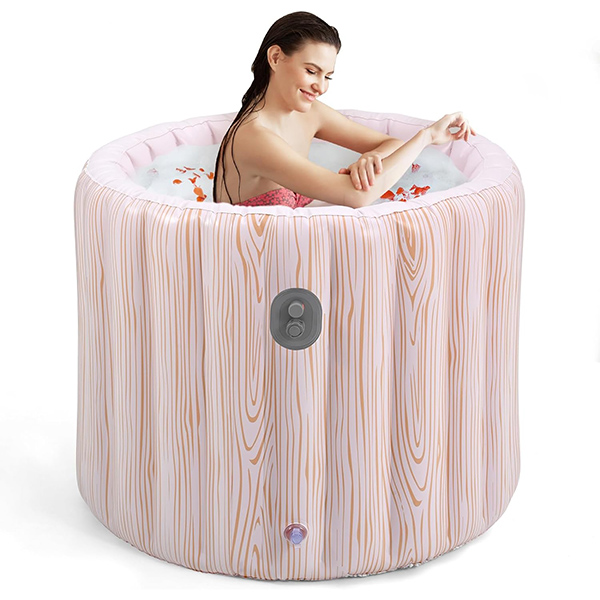
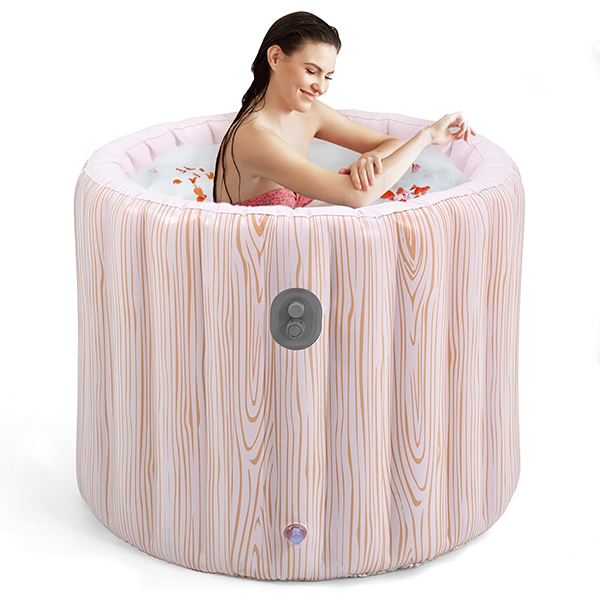
| Place Of Origin: | China |
| Color: | Pink |
| Size: | Custom Size |
| Logo: | Accept Customized Logo |
| Packaging: | Opp Bag / Brown Box / Color Box |
| Transportation: | Express, Sea, Land, Air |
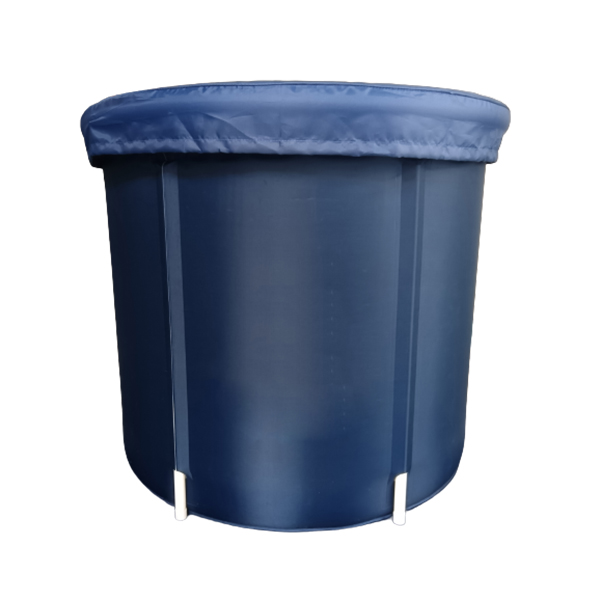
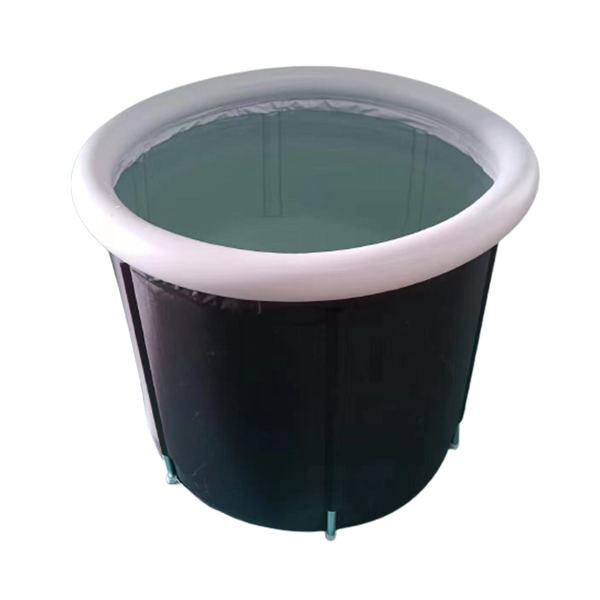
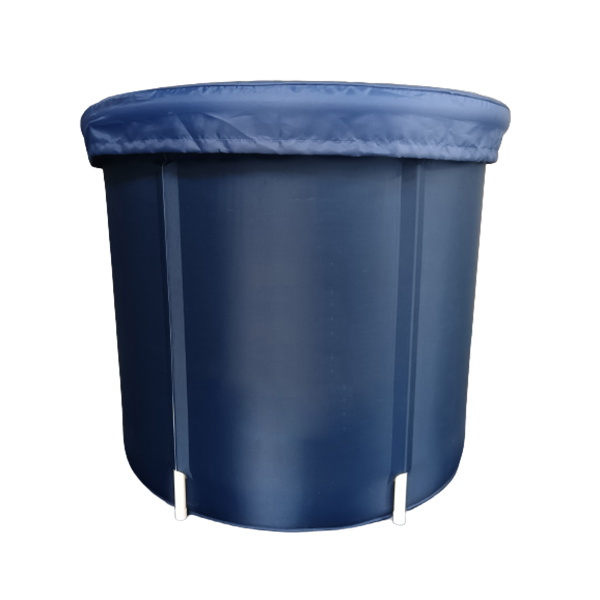
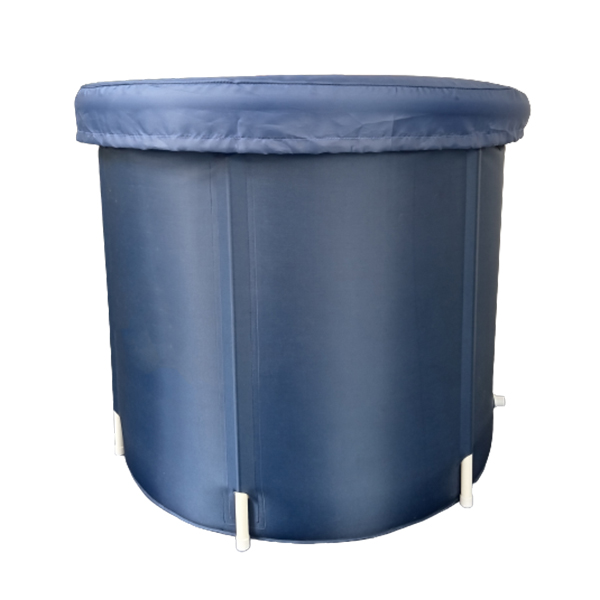
| Type: | Recovery Inflatable Bathtub |
| Material: | Eco-Friendly PVC, Pearl Cotton, Nylon Cloth |
| Payment Method: | T/T |
| Terms Of Trade: | T/T |
| Factory Nature: | China Manufacturers Suppliers Factory |
1. Multi-Layer Insulation
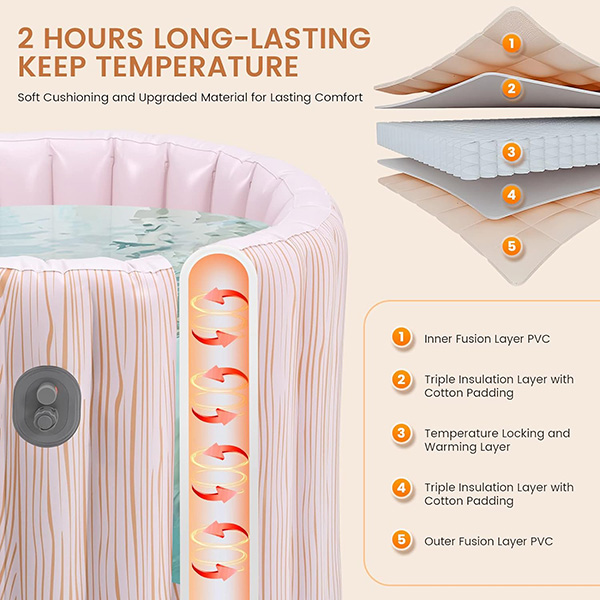
The Inflatable Cold Water Tub features a five-layer composite structure design, including inner and outer PVC layers and three layers of insulation, which can control water temperature fluctuations to within ±3℃ over a 2-hour period. When used for ice baths or hot baths in a normal temperature environment, it effectively reduces heat exchange, minimizing the need for frequent ice addition or heating, and improving overall stability and energy efficiency.
2. Deep Immersion
With an overall height of approximately 80cm, the effective immersion depth covers the area below the shoulders, suitable for single use by individuals 170–190cm tall. With a water capacity of approximately 150L when full, it allows for complete lower limb and torso cold therapy, enhancing the body's sense of immersion and comfort during ice baths or hot baths.
3. Rapid Inflation
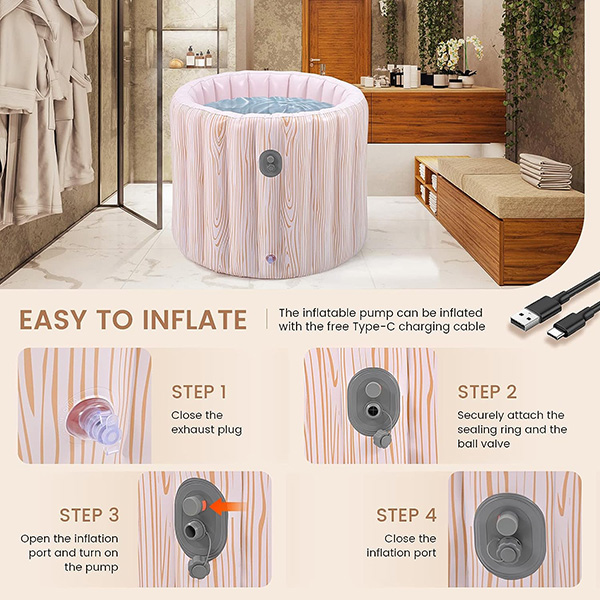
The Inflatable Cold Water Tub has a built-in inflation port that supports manual or electric pump operation, with an average inflation time of approximately 3–5 minutes. After inflation, the tub wall maintains a stable shape, with a static pressure capacity of over 120kg. It is resistant to collapse during normal sitting or standing, making it suitable for frequent use.
4. Stable Structure
The tub base features a thickened PVC base design, approximately 0.4mm thick, with a ground contact area more than 20% larger than ordinary inflatable products, effectively distributing the weight of the water and the user's pressure. Even when full of water, it maintains overall vertical stability, reducing the risk of tipping, and is suitable for hard surfaces or flat outdoor areas.
5. Convenient Drainage
Large-diameter drainage valves are located at the bottom and side walls, with a single drainage flow rate of 25–30L per minute, allowing for complete drainage in approximately 6 minutes. The drainage valves feature a reusable opening and closing mechanism, reducing the likelihood of leaks and facilitating daily cleaning and quick storage.
1. Ice Bath Recovery
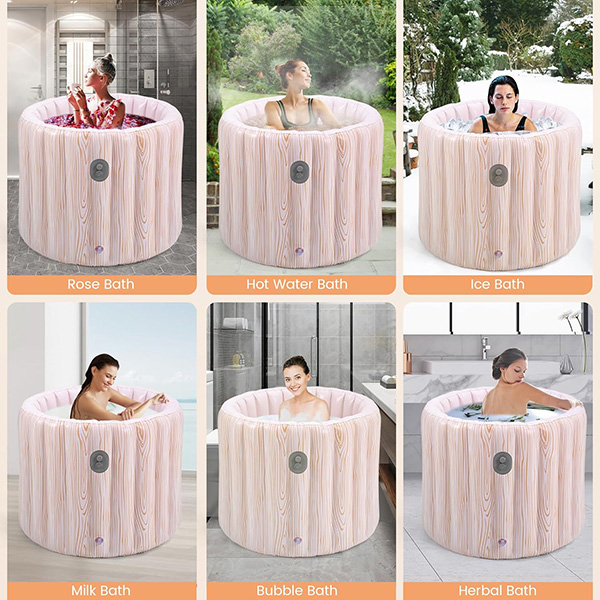
The Inflatable Cold Water Tub is suitable for cold water immersion after exercise, with a typical water temperature range of 5–15℃ and a single use duration of 10–15 minutes. It can be used for body recovery after strength training, running, or high-intensity exercise, helping to relieve muscle fatigue and improve post-exercise discomfort.
2. Hot Water Bathing
It supports filling with hot water at around 40℃ for daily bathing, and with the help of its insulation structure, it can maintain a stable water temperature for 1.5–2 hours. Suitable for home relaxation, pre-sleep routines, and especially ideal for spaces where a fixed bathtub cannot be installed.
3. Home Bathroom Use
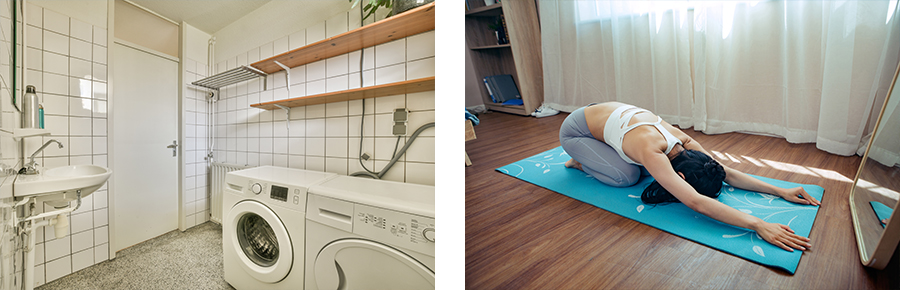
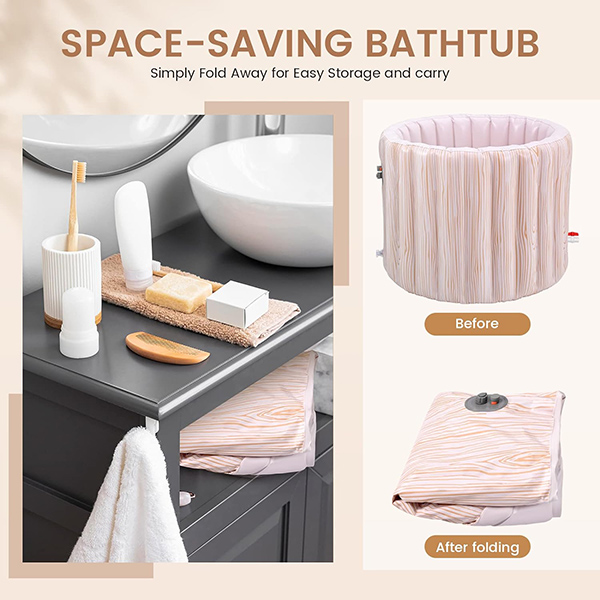
With a diameter of approximately 80cm, it can be flexibly placed in the bathroom or balcony area. After use, it folds down to a thickness of about 15–20cm, allowing for storage in cabinets or under the bed, making it more suitable for small and medium-sized homes.
4. Outdoor Use
The Inflatable Cold Water Tub weighs approximately 3.5kg and is easy to carry when folded, making it suitable for courtyards, camping, or outdoor training areas. The material has basic waterproof and wear-resistant properties and can be used on flat grass or mats, adapting to various non-permanent locations.
5. Commercial Applications
Suitable for use as auxiliary equipment in gyms, physiotherapy centers, or recovery training facilities. Customizable sizes and designs are available, facilitating batch deployment in different training areas to meet the needs of multiple users.


Cleaning and maintenance: After use, the accumulated water in the bathtub should be emptied in time, and a clean damp cloth should be dipped in a small amount of mild detergent to gently wipe the inner and outer walls of the tub to remove residual stains and scale. For stubborn stains, the concentration of the detergent can be appropriately increased, but avoid using strong acid or strong alkaline detergents to avoid corrosion to the material. After wiping, wipe it again with clean water, and place the bathtub in a well-ventilated place to dry naturally. Make sure it is completely dry before folding and storing it to avoid mold or bacteria growth in the material due to a humid environment.
Inflation and deflation maintenance: Before each inflation, check whether the inflation hole and inflation pipe are unobstructed, whether there is any foreign matter blocking or damage, if there is any foreign matter, it should be cleaned in time, and if there is any damage, the corresponding parts should be replaced. When inflating, control the air pressure according to the requirements of the product manual to avoid over-inflation or under-inflation. Over-inflation may cause the bathtub material to over-stretch, reduce the elasticity of the material, and affect the service life; under-inflation will make the bathtub not stable enough when in use. At the same time, regularly maintain the air pump, check whether the pump's motor, air pipe and other components are working properly, and ensure that the air pump can stably provide sufficient air pressure for the bathtub.
Folding storage: When folding the bathtub, the bathtub should be completely deflated first, and then the correct folding method should be followed to avoid unnecessary creases or extrusion damage to the bathtub during the folding process. After folding, put it in a dedicated storage bag or storage box and place it in a cool, dry and well-ventilated place. The temperature of the storage environment should be controlled between -10℃ and 40℃, avoiding direct sunlight and high temperature baking to prevent the material from aging, hardening or becoming brittle. At the same time, avoid heavy objects pressing on the bathtub for a long time to prevent the bathtub from deforming or damaging the internal structure due to long-term pressure.
Regular inspection: Regularly conduct a comprehensive inspection of the bathtub, including whether there are scratches, cracks, wear and tear on the surface of the material, whether the inflation holes and deflation holes are normal, and whether the various connection parts are firm. If slight scratches or wear are found, special repair materials can be used to repair them in time to prevent the scratches and wear from further expanding and affecting the sealing and safety of the bathtub. For other problems found, such as loose connection parts, they should be tightened or replaced in time to ensure the stability and reliability of the bathtub during use.
Use environment maintenance: When using a bathtub, pay attention to the cleanliness and tidiness of the surrounding environment, and avoid placing the bathtub in places where sharp objects, oil stains, chemicals, etc. may cause damage to it. If used outdoors, ensure that the ground is flat to prevent the bathtub from being scratched by sharp stones or branches. At the same time, during use, avoid using too much shower gel, essential oils and other chemicals in the bathtub to prevent these substances from having adverse effects on the bathtub materials, such as corrosion and discoloration. If these chemicals need to be used, the dosage should be strictly controlled in accordance with the requirements of the product manual, and cleaned in time after use.
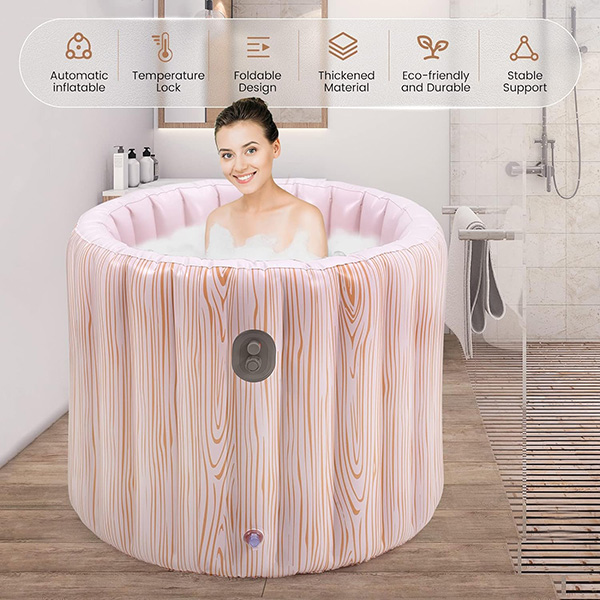
A: The tub is approximately 80cm high, and the internal space is designed for single-person use by individuals approximately 170–190cm tall. In a seated position, the water level can reach below the shoulders, ensuring effective immersion in cold or hot water without putting extra pressure on the neck.
A: Under standard inflation pressure, the tub wall can withstand a static load of approximately 120kg. The multi-layer PVC structure and thickened base work together to keep the tub upright when full of water and during use. Normal getting in and out will not cause significant shaking or collapse.
A: In a room temperature environment, with the multi-layer insulation structure, the water temperature typically fluctuates by no more than ±3℃ within 2 hours. The actual insulation effect will be affected by ambient temperature, water volume, and initial water temperature, but it is generally better than ordinary single-layer inflatable bathtubs.
A: The bottom and side drain valves provide a drainage efficiency of 25–30L per minute, and a full tub can be emptied in about 6 minutes. After draining, the inner wall can be directly rinsed. The PVC surface is not prone to staining, making daily maintenance simple.
A: Customization of size, color, and logo is supported, suitable for project procurement or bulk orders. The product structure and packaging solutions can be adjusted according to different usage scenarios, making it a convenient and stable long-term supply solution for inflatable bathtubs.
 Mobile Phone:
 Phone:
 Contact Now
 Youtube